Build log
Assembly as it happened, including what did not go to plan. No scale was used: volumes were measured with 200 ml jars.
Column body
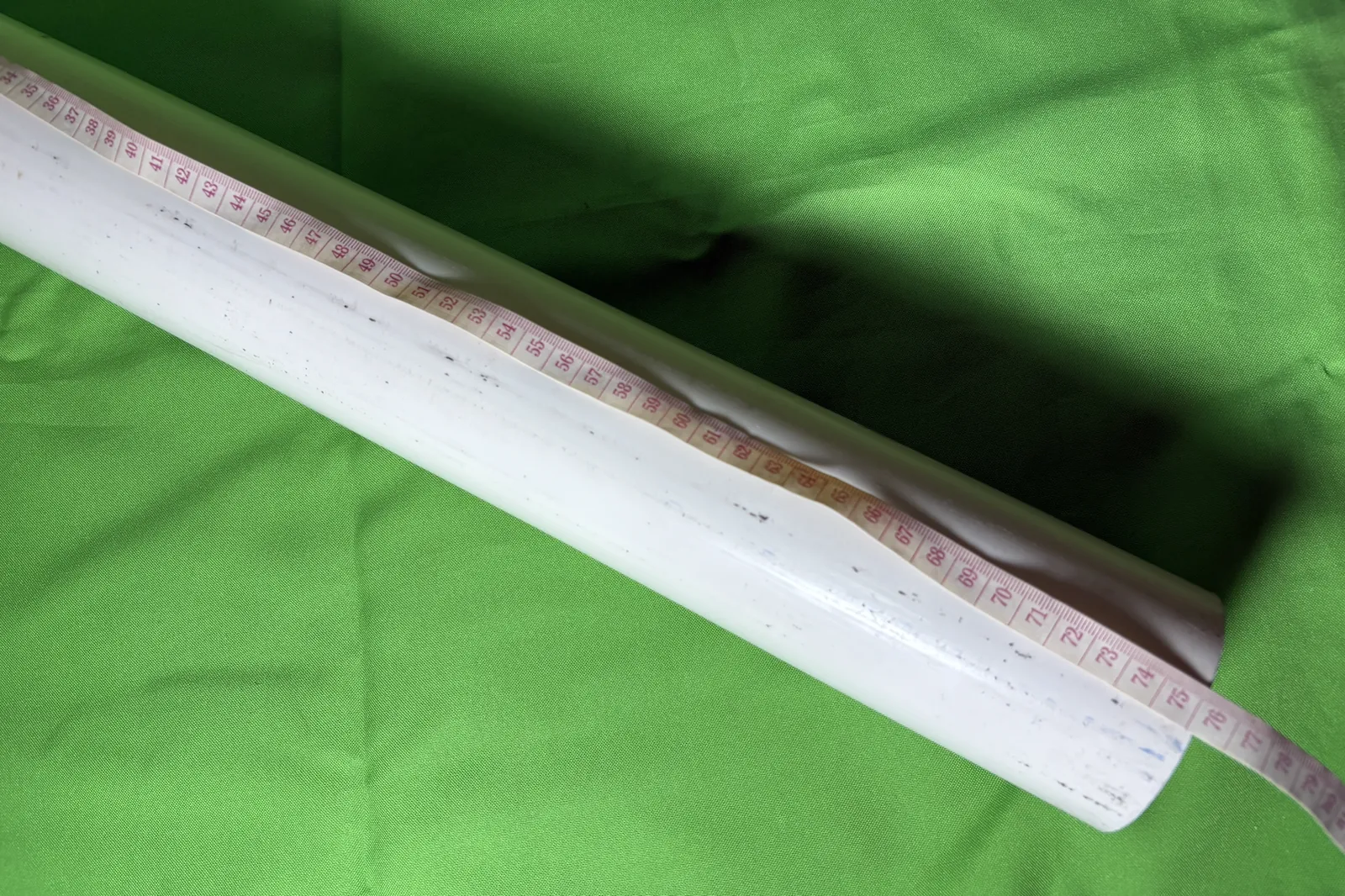
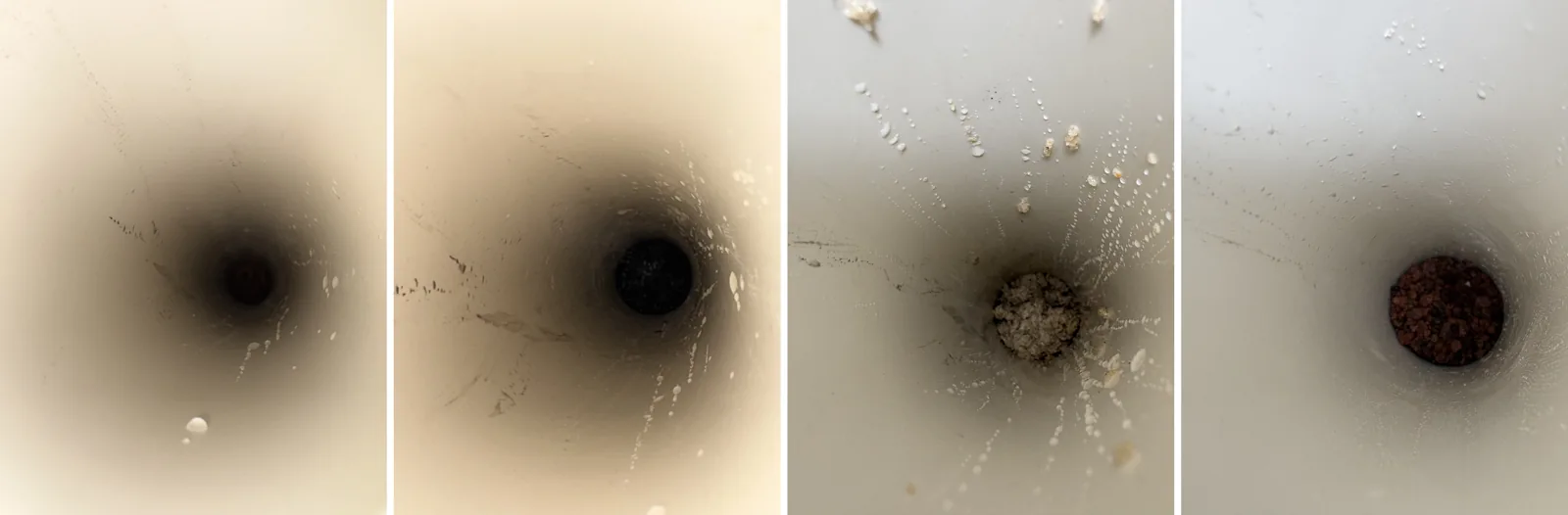
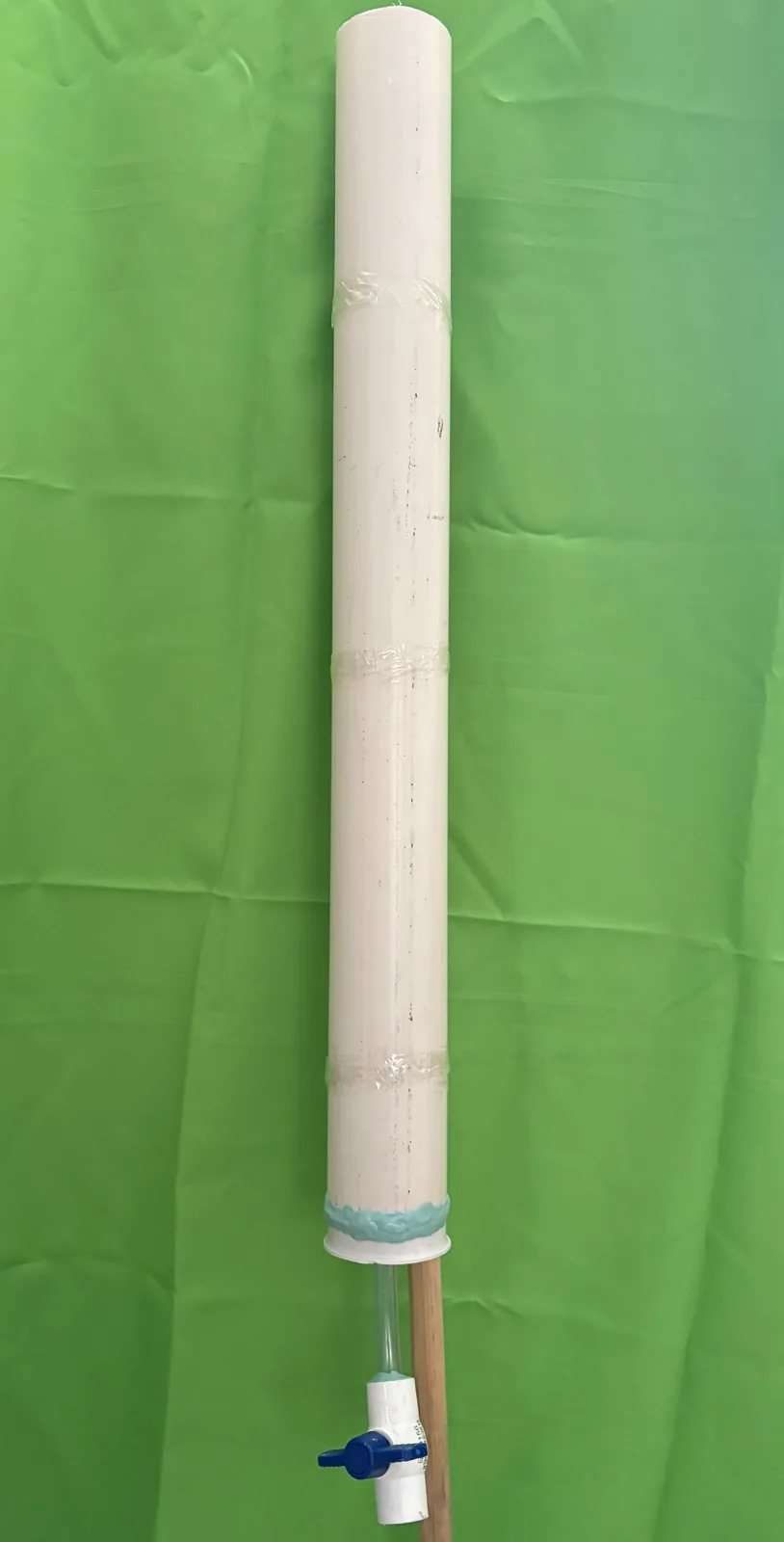
PVC pipe, 3 in nominal, cut to 750 mm. The pipe is opaque, so each layer is photographed from above as it goes in rather than through the wall.
With the cap on, the depth from the cap floor to the rim is 770 mm. Layer surfaces are checked with a tape measure from the rim. The column is taped to a mop handle leaning against a wall.
Outlet
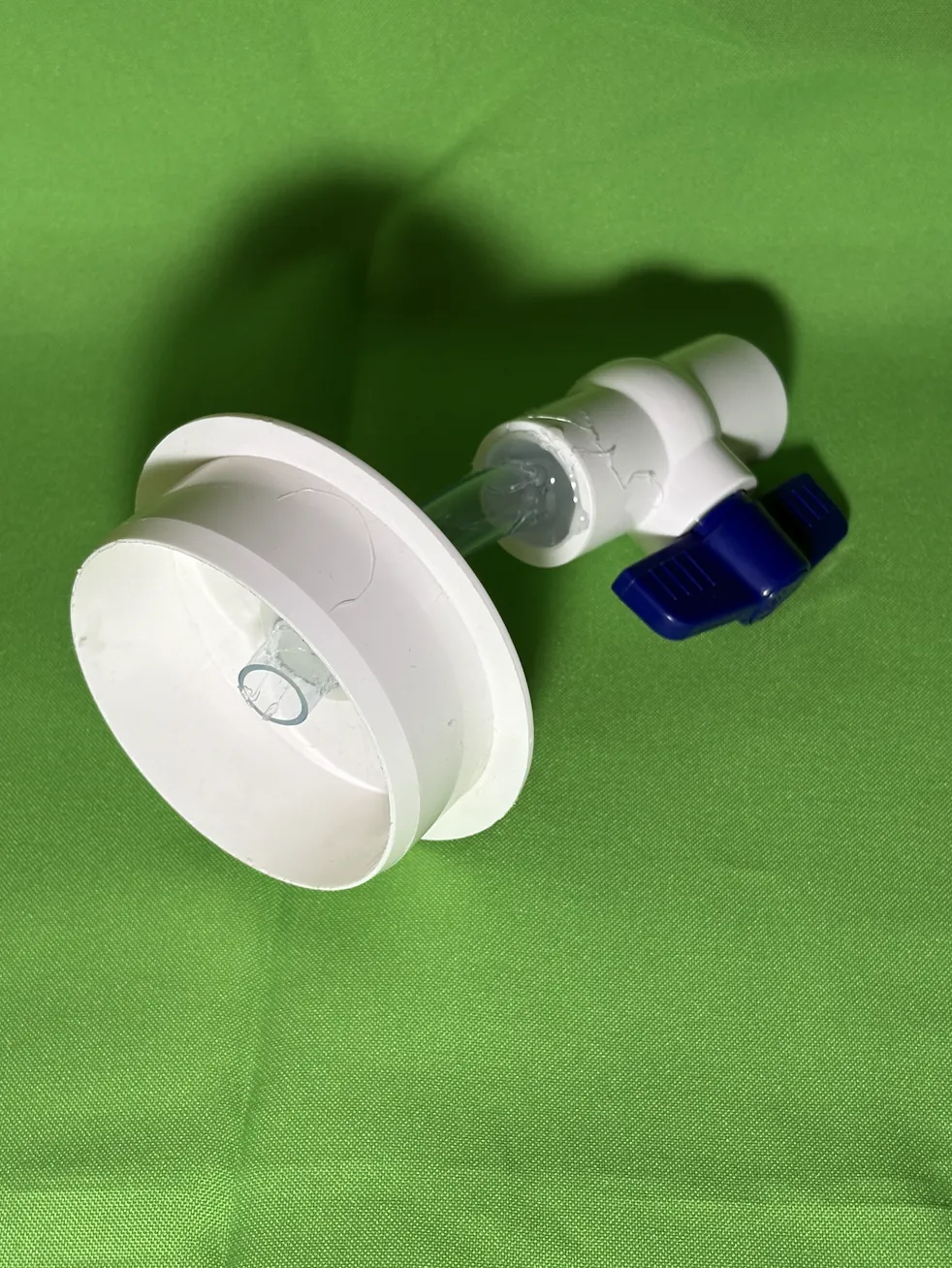
A bore through a 3 in PVC end cap carries a length of clear ½ in hose into a ½ in ball valve. The cap slides onto the pipe over PTFE tape rather than being cemented, so the column can be taken apart.
The first seal was hot-melt glue, which does not hold on wet PVC. It was stripped out and replaced with two-part epoxy.
Leak test
The capped outlet held water for two hours, then the cap on the full pipe held too. Not a drop at either joint, and the valve flows freely.
Layer separators
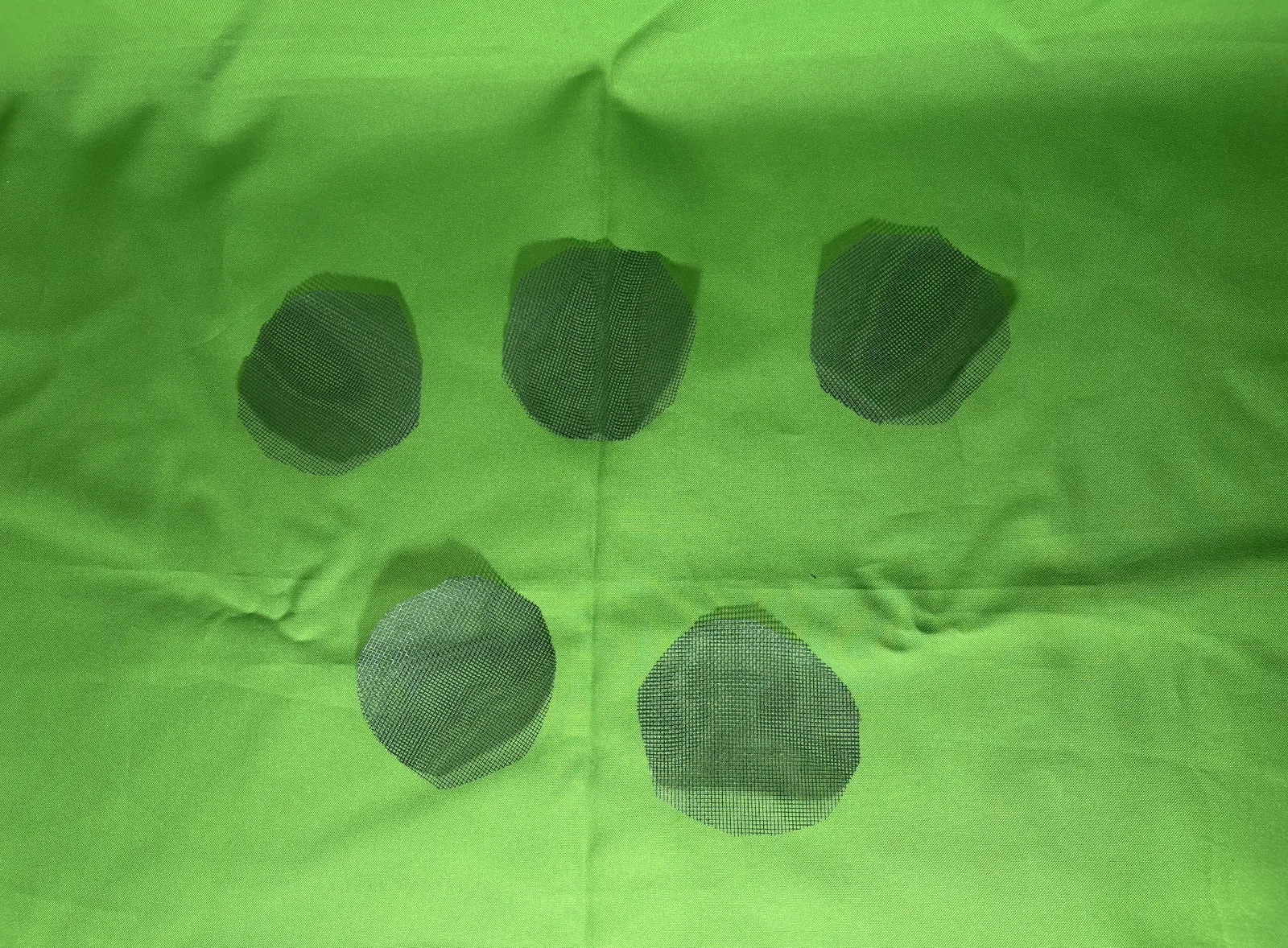
Five discs cut from plastic insect mesh: one under the support layer and one between each pair of layers above it.
Charcoal
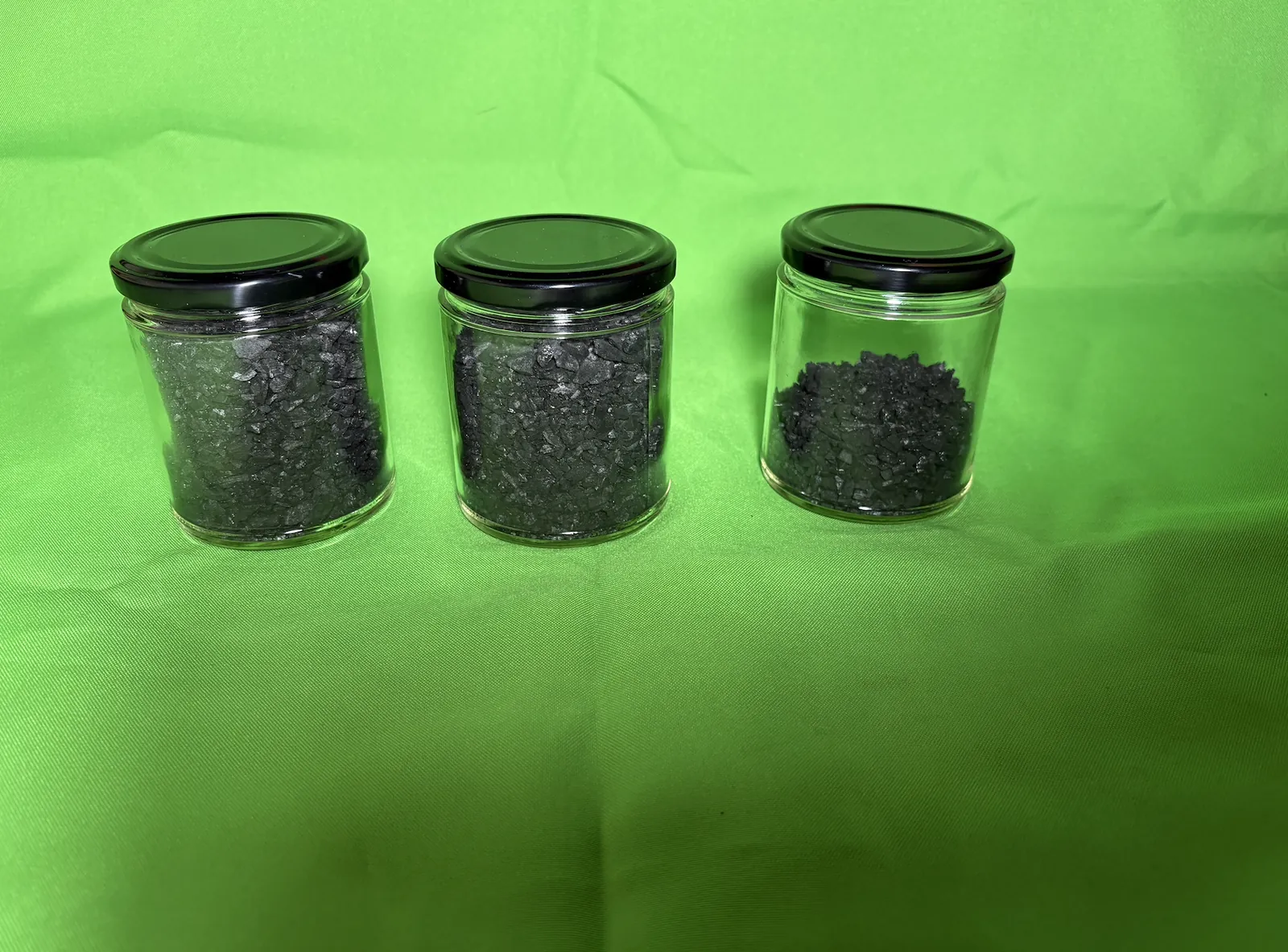
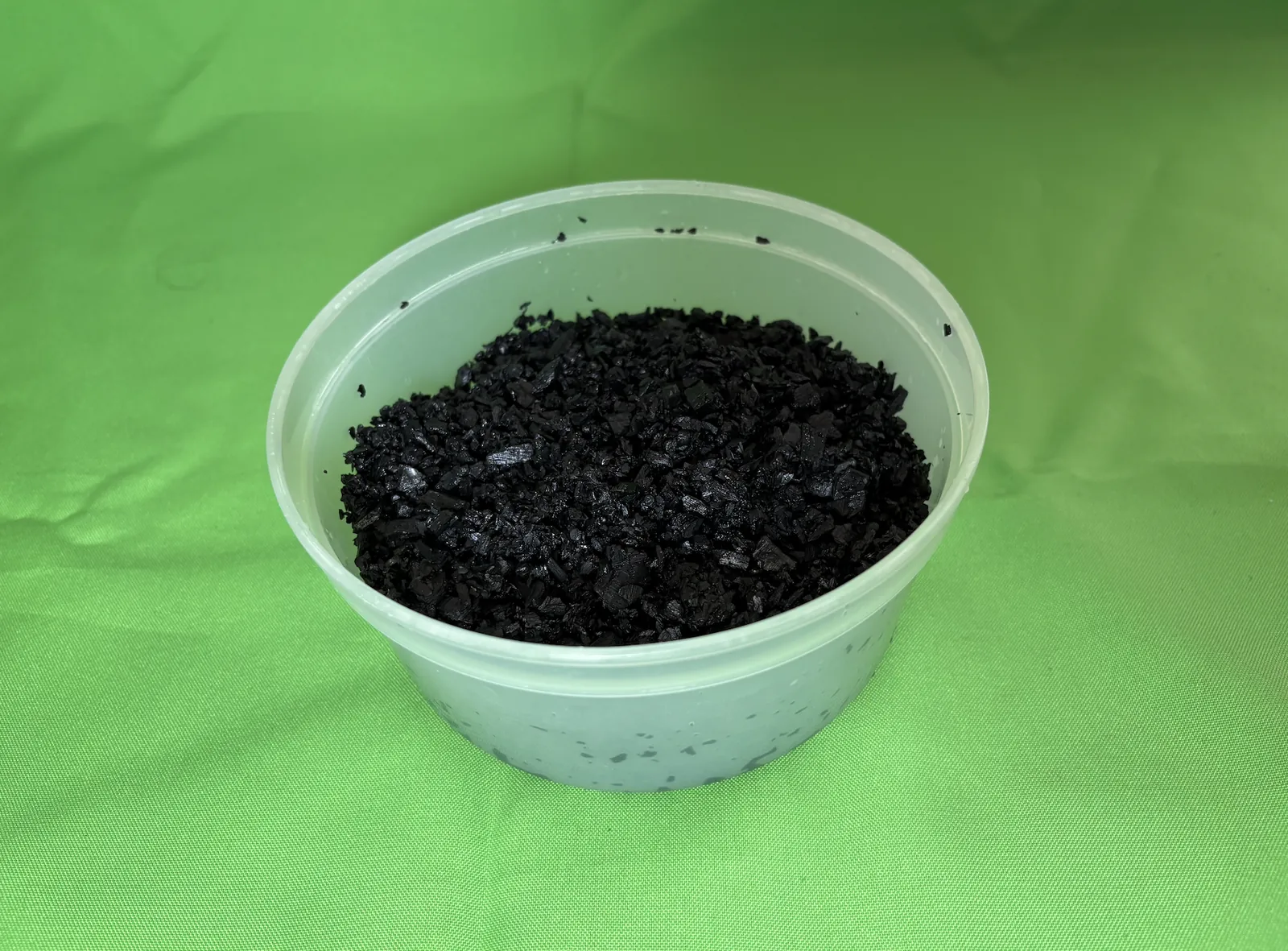
Lump charcoal, crushed by hand inside nested bags. The fraction held on the insect mesh was kept and the powder discarded.
| Stage | Volume |
|---|---|
| Crushed, dry | ≈ 500 ml |
| After topping up | ≈ 550–600 ml |
Rinsed and soaked overnight so it sinks instead of floating up through the layer above. Some pieces would not crush below gravel size, so it is loaded as a graded layer: coarse at the bottom, fine on top.
Scoria
Sorted with the insect mesh and by hand into two fractions.
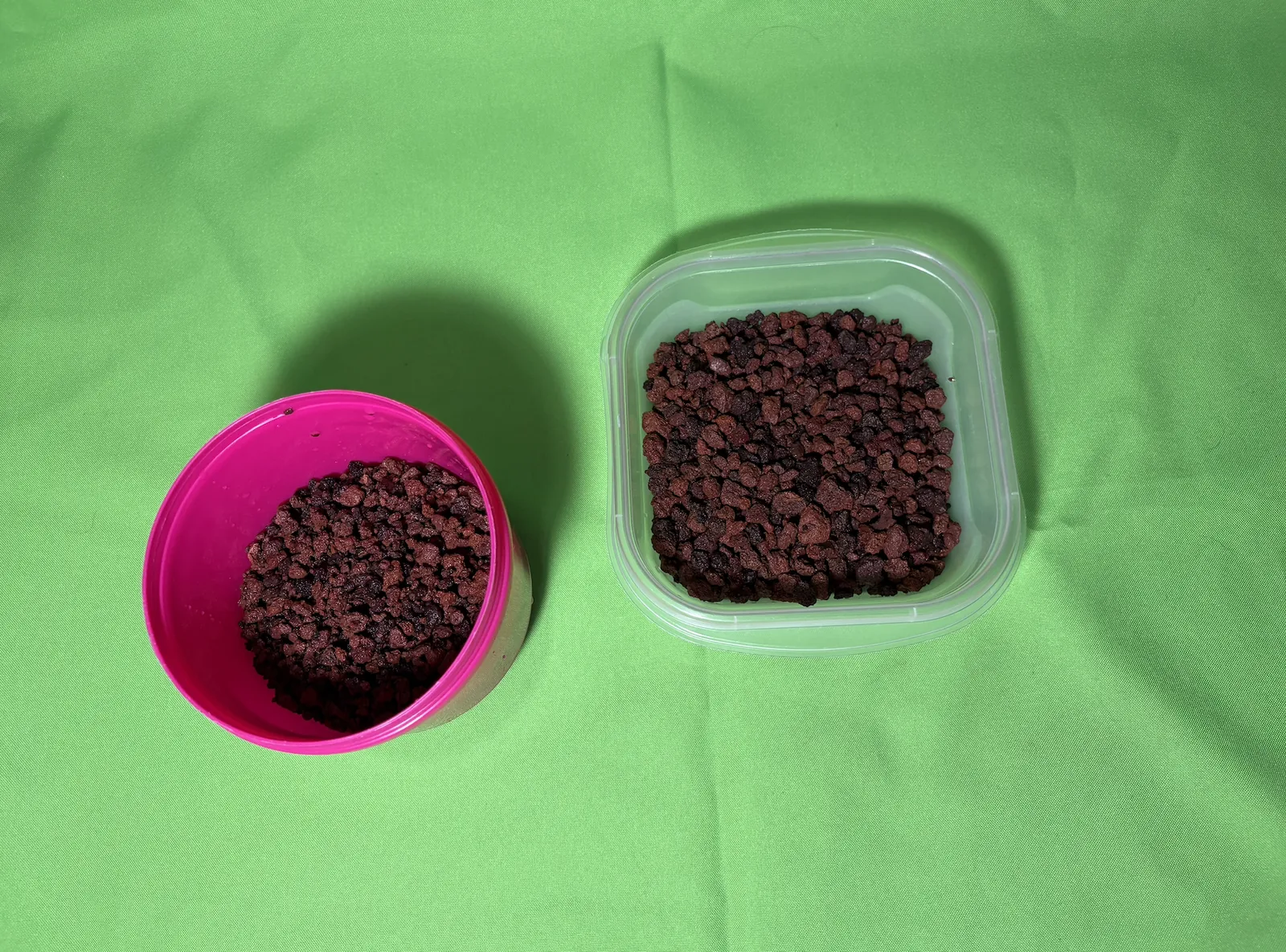
| Fraction | Volume | Destination |
|---|---|---|
| Coarser | ≈ 300 ml | Layer 1, support |
| Finer | ≈ 500 ml | Layer 4, coarse top layer |
Fine sand
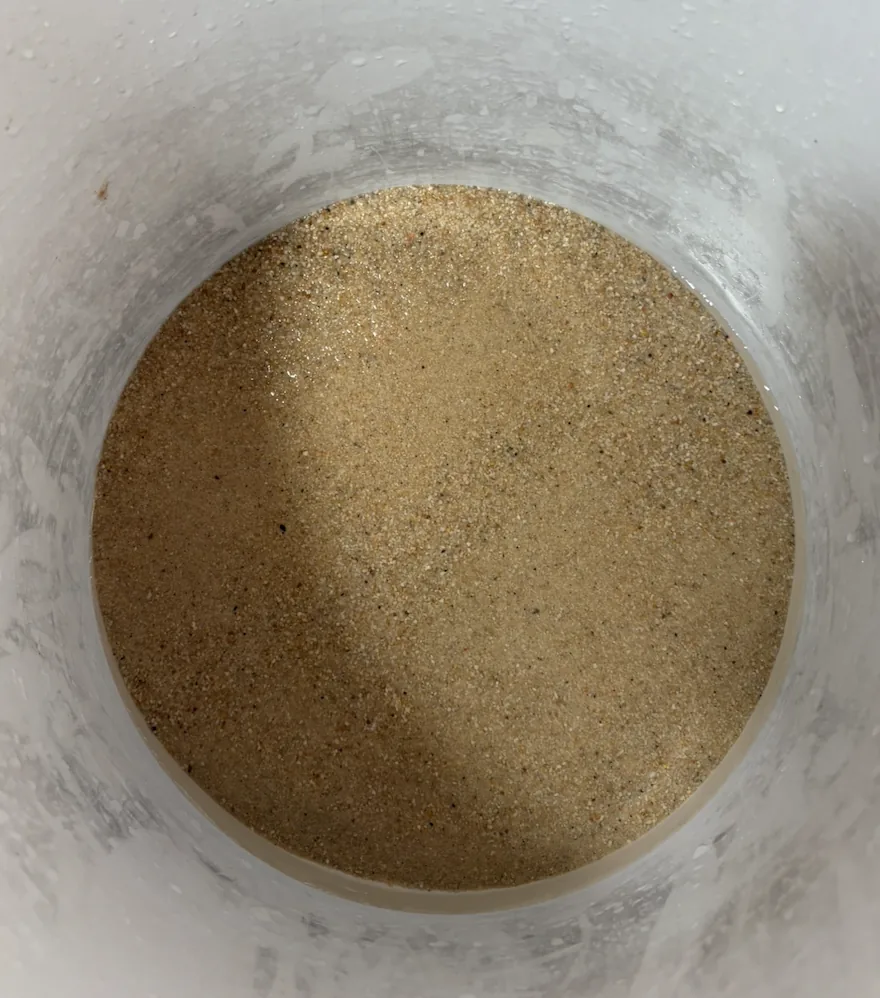
Hand crushing stopped at gravel size, so neither scoria fraction is fine enough for layer 3. A fine carbonate sand already on hand was tried first and set aside: it kept releasing fines into the rinse water, and there was not enough of it.
Layer 3 uses aquarium-grade fine silica sand instead. Quartz does not break down into fines the way carbonate does, and it leaves water chemistry unchanged. A 3 kg bag covers the ≈ 1.3 kg the layer needs and leaves enough to reload it.
Rinsed in a tub until the water ran clear.
Loaded column
Loaded bottom up per RWL-001, each layer placed into standing water and checked with a tape measure from the rim.
Still to do
- Build the photometric rig and shoot the calibration series